Info & Blog

San Pietro in Bevagna: general information

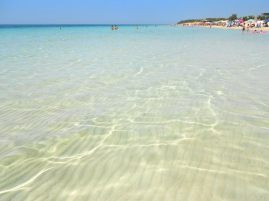
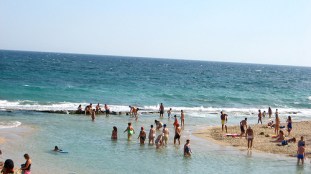
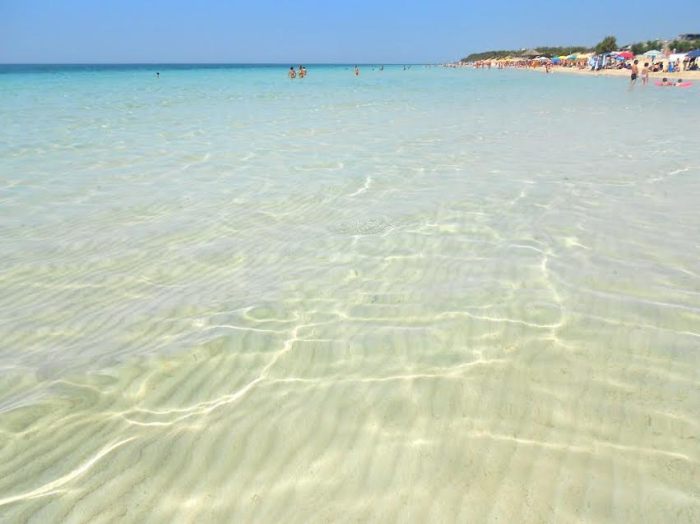
San Pietro in Bevagna (San Pietru Manduria in local dialect) is a seaside village on the Ionian coast of Salento in the township of Manduria, province of Taranto. In the summer the village is full of tourists (mostly locals) who enjoy seaside tourism at a reasonable price. San Pietro in Bevagna has a 5 kilometer long sandy coastline. This coastline is one of the most beautiful one in Italy and very highly rated by locals and by tourists alike and sometimes is referred to as the “Puglian Maldives”.
bevigeneral

The village is located on the Ionian coast between Taranto and Gallipoli, some 10 km from the town of Manduria in southern Italy, Apulia (Puglia). The village’s tiny river is called Chidro, which is one of the few rivers in the Salento region. The village is divided into different neighborhoods: the central area, Specchiarica (to the east) and the Messapii Camp area to the west.

The origin of San Pietro in Bevagna is closely linked to the history of the Apostle St. Peter. The legend holds that during a sea voyage, struck by a bad storm St. Peter wrecked on the Ionian coast where now stands the beautiful church in the center of the village. Tired and thirsty, St. Peter walked past a freshwater well by which stood a statue of a pagan god (most probably Zeus). Seeing the sculpture he made the sign of the cross by which the statue was shattered and fell down. The people who witnessed the miracle converted to Christianity. The village started to be populated by people coming from afar to visit the sacred place where the apostle had performed this miracle act. The church (Church of the Rock, or Crypt Redeemer) that still lies at the center of the village is of mystical beauty.

In reality San Pietro in Bevagna is the beach village of Manduria with a busy summer season serviced by a lot of restaurants, cafes, shops, delis, hotels, apartments and villas for rent and a seasonal attraction park close to the beach. It offers a great variety of leisure and cultural activities. The village started to grow after WWII, especially after the seventies. In the seventies a lot of holiday homes were constructed without official permission which was later stopped by the authorities.

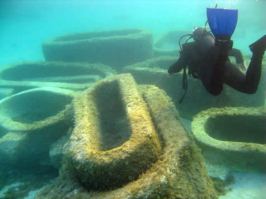
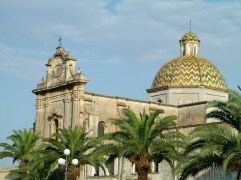
The symbol of the village is the church dedicated to St. Peter, leaning to a medieval watchtower. On the seabed near the beach, there are marble sarcophagi that are the remains of the cargo of a Roman ship sunk there in the third century A.D. The sarcophagi can be seen underwater by diving. The river Chidro reaches the sea on the beach of San Pietro in Bevagna, therefore tourists can swim in fresh water as well. The natural park around the river is called Riserva naturale Regionale “Foce del Chidro” (Regional natural reserve of the Chidro mouth).The Chidro River, only 350 meters long, is fed by underground springs, and flows into the sea through a channel formed naturally. This river and its immediate neighborhood host rare species. The river is popular with divers who dive to admire the vegetation. Also one can observe the phenomenon of “citri”, the bubbling of the sand, but the most peculiar phenomenon is the enormous jet of water coming out with considerable pressure from the source at 12 meters depth. According to the legend, the water of the Chidro healed Apostle Peter from leprosy.

San Pietro in Bevagna has a warm and temperate climate with a hot and sunny summer. The winter has a lot more rainfall than the summer. The average temperature of San Pietro in Bevagna is 16.9 °C (Köppen-Geiger climate classification), with July and August being the hottest months, with an average of 25 °C. The average sea temperature in these months is above 25 °C. The average annual rainfall is 534 mm; 16 mm in July, which is the driest month and 75 mm in November is the wettest. During the year the average monthly temperatures vary by 16.2 °C.

The economy of San Pietro in Bevagna is based on summer tourism. Tourism is mostly local but foreign tourism is also becoming more and more significant in the village. Due to the village’s important tourism incomes it has become one of the main economic resources of the municipality of Manduria. Around San Pietro in Bevagna there are major olive plantations and vineyards where the special local grape, called “primitivo” is cultivated. Primitivo is a variety of red grape whose ideal habitat is the red soils of Taranto Province where it is used to produce the wine “Primitivo di Manduria” Doc.

The transport company SITA SUD guarantees an urban public transport service between Manduria, Torre Borraco, San Pietro in Bevagna and Torre Colimena (bus line 4). Rail transport is ensured by the Manduria station, part of the Ferrovie del Sud Est circuit with connections to all locations served by the line.

SAN PIETRO IN BEVAGNA: ALLGEMEINE INFORMATIONEN

San Pietro in Bevagna (San Pietru Manduria im lokalen Dialekt) ist ein Küstendorf an der ionischen Küste des Salento in der Gemeinde Manduria, Provinz Taranto. Im Sommer ist das Dorf voller Touristen (meist Einheimische), die den Seetourismus zu einem vernünftigen Preis genießen. San Pietro in Bevagna hat eine 5 Kilometer lange freie Sandküste. Diese Küstenlinie ist eine der schönsten in Italien und sehr hoch bewertet von Einheimischen und ebenfalls von Touristen, und manchmal auch als “Puglischen Maldiven” bezeichnet.

Das Dorf liegt an der Ionischen Küste zwischen Taranto und Gallipoli, etwa 10 km von der Stadt Manduria entfernt, im Süden Italiens, in Apulien (Puglia). Der kleine Fluss des Dorfes heißt Chidro, er ist einer der wenigen Flüsse im Salento. Das Dorf ist in verschiedene Nachbarschaften geteilt: der zentrale Bereich (wo sich die Kirche findet), Specchiarica (nach Osten) und der Messapi Lager im Westen.

San Pietro in Bevagna ist das Stranddorf Manduria mit einer geschäftigen Sommersaison, die von vielen Restaurants, Cafes, Geschäften, Delis, Hotels, Apartments und Villen zur Miete und einem saisonalen Attraktionspark in der Nähe des Strandes serviert wird. Es bietet eine Vielzahl von Freizeit- und Kulturaktivitäten. Das Dorf begann nach dem Zweiten Weltkrieg zu wachsen, besonders nach den siebziger Jahren. In den siebziger Jahren wurden viele Ferienhäuser ohne offizielle Erlaubnis gebaut, die später von den Behörden gestoppt wurde.

Das Symbol des Dorfes ist die Kirche, die dem hl. Petrus gewidmet ist und sich an einen mittelalterlichen Wachtturm lehnt. Auf dem Meeresboden in der Nähe des Strandes gibt es Marmorsarkophage, die die Überreste der Ladung eines römischen Schiffes sind, das dort im dritten Jahrhundert abgesenkt wurde. Die Sarkophage kann unter Wasser durch Tauchen gesehen werden. Der Fluss Chidro erreicht das Meer am Strand von San Pietro in Bevagna, wo Touristen auch im Süßwasser schwimmen können. Der Naturpark rund um den Fluss heißt Riserva Naturale Regionale “Foce del Chidro” (Regionales Naturschutzgebiet des Chidro-Mundes). Der Chidro-Fluss, der nur 350 Meter lang ist, wird von unterirdischen Quellen gespeist und fließt durch einen Kanal in das Meer natürlich. Dieser Fluss und seine unmittelbare Nachbarschaft Gastgeber seltene Arten. Der Fluss ist bei Tauchern beliebt, die die Vegetation bewundern. Man kann auch das Phänomen von “citri”, die Blasenbildung des Sandes, beobachten, aber das eigenartigste Phänomen ist der enorme Wasserstrahl, der mit beträchtlichem Druck aus der Quelle in 12 Meter Tiefe herauskommt. Nach der Legende heilte das Wasser des Chidro Apostel Petrus von Lepra.

San Pietro in Bevagna hat ein warmes und gemäßigtes Klima mit einem heißen und sonnigen Sommer. Der Winter hat viel mehr Niederschlag als der Sommer. Die Durchschnittstemperatur von San Pietro in Bevagna beträgt 16,9 ° C (Köppen-Geiger Klimaklassifikation), wobei Juli und August die heißesten Monate mit durchschnittlich 25 ° C sind. Die durchschnittliche Meerestemperatur in diesen Monaten liegt über 25 ° C. Der durchschnittliche jährliche Niederschlag beträgt 534 mm; 16 mm im Juli, das ist der trockenste Monat und 75 mm im November, der der feuchteste ist. Im Laufe des Jahres variieren die durchschnittlichen monatlichen Temperaturen um 16,2 ° C.

Die Wirtschaft von San Pietro in Bevagna basiert sich auf Sommertourismus. Tourismus ist meist lokal, aber auch der ausländische Tourismus wird im Dorf immer wichtiger. Aufgrund der bedeutenden touristischen Einkommen des Dorfes hat es sich zu einer der wichtigsten wirtschaftlichen Ressourcen der Gemeinde Manduria entwickelt. Um San Pietro in Bevagna gibt es große Olivenplantagen und Weinberge, wo die besondere lokale Traube, der “Primitivo” angebaut wird. Primitivo ist eine Vielzahl von roten Trauben, deren idealer Lebensraum die roten Böden der Provinz Taranto sind, wo es verwendet wird, um den Wein “Primitivo di Manduria” Doc zu erzeugen.

Das Transportunternehmen SITA SUD garantiert einen öffentlichen Nahverkehr zwischen Manduria, Torre Borraco, San Pietro in Bevagna und Torre Colimena (Buslinie 4). Der Schienenverkehr wird durch die Manduria-Station, einen Teil der Ferrovie del Sud Est-Strecke mit Verbindungen zu allen Orten, die von der Linie bedient werden, gewährleistet.

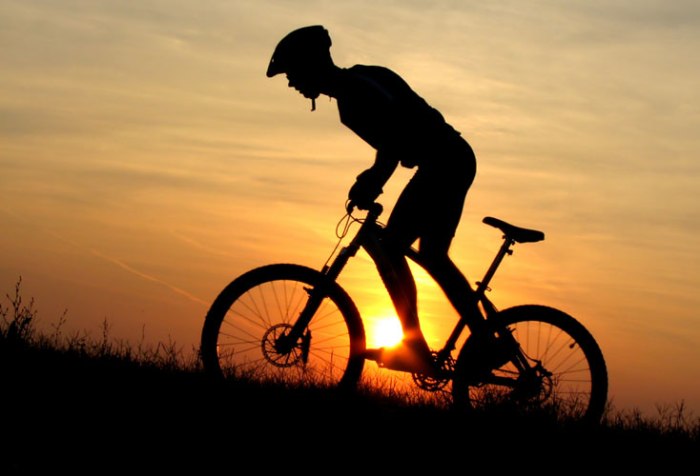
Best bike trails around San Pietro in Bevagna with interactive map / I migliore Percorsi mountain bike in San Pietro in Bevagna con mappa


65.45 km – Difficult – author: maxbiker

TrailRank: 22

60.52 km – Very difficult – author: maxbiker

TrailRank: 19

20.02 km – Medium – author: maxbiker

TrailRank: 16

35.6 km – Difficult – author: maxbiker

TrailRank: 16

17.26 km – Easy – author: maxbiker

On the seashore!

TrailRank: 10

26.77 km – Easy – author: maxbiker

TrailRank: 10

 (Italiano)

65,45 chilometri – Impegnativo – autore maxbiker

TrailRank: 22

60,52 chilometri – Molto impegnativo – autore maxbiker

TrailRank: 19


20,02 chilometri – Medio – autore maxbiker

TrailRank: 16


35,6 chilometri – Impegnativo – autore maxbiker

vicino San Pietro in Bevagna

TrailRank: 16

17,26 chilometri – Facile – autore maxbiker

TrailRank: 10


26,77 chilometri – Facile – autore maxbiker

TrailRank: 10

bike1

Source: https://it.wikiloc.com/percorsi/mountain-bike/italia/puglia/san-pietro-in-bevagna


5 useful things to know when on holiday in San Pietro in Bevagna – Tips by Villa Edina

  1. Weather and holiday timing

San Pietro in Bevagna has a warm and temperate climate with a hot and sunny summer. The winter has a lot more rainfall than the summer. July and August are the hottest months, with an average of 25 °C. The average sea temperature in these months is above 25 °C. The average annual rainfall is 534 mm; 16 mm in July, which is the driest month and 75 mm in November is the wettest. The most popular months are July and August for tourism, but, May, June and September are also warm enough to have a good summer holiday. You can easily swim in the sea until October. Beaches are not only stunning, but also free all over San Pietro in Bevagna.

Ferragosto is an Italian public holiday celebrated on 15 August, which is the typical summer vacation period (around mid-August) for Italians. Mid-August is therefore the most lively (and crowded) time for taking a holiday in Italy. San Pietro in Bevagna nevertheless is practically never unbearably crowded.

More info: here! and here! and here!

  1. Smart shopping

There are many groceries, delis, small shops, bakeries in San Pietro in Bevagna. One of the best and largest grocery malls of the village is about 200 meters from Villa Edina (on Via Marina – open all year-around), where you can buy all kinds of food and fruit and household necessities. For large-scale shopping of food and household products the best and cheapest way is to drive to the Eurospin mall in Manduria (about 10 kilometers from Villa Edina).

More info: here!

  1. Practicalities in Manduria and San Pietro in Bevagna (post office, police, banks, parking, internet café, pharmacy, doctors, etc.)

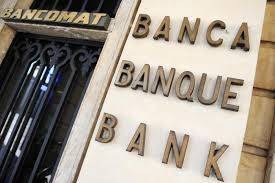
You have shops, cafés, bars in San Pietro in Bevagna, but also a pharmacy in the center, a few steps from the beach and also a medical cabinet. Parking is mostly free, except for a very small central area (close to the church, towards the beach where the beach market stands are set up). There are several restaurants with free wifi, there is a (year-round) pizzeria and bar on via Marina, very close to Villa Edina with free wifi (Villa Edina also has it). There is no bank in the village, for this you have to go to Manduria where you can find several banks and ATMs, also post offices, hospital, dentists and police stations. The nearest petrol station is in Manduria, a few hundred meters after crossing the city limit (on the highway coming from San Pietro in Bevagna – to your right).

The telephone code of Italy is +39. The area code for the Province of Taranto is: 099.

Just for you to know: you are in Comune di Manduria in Provincia Taranto (TA) in Regione Puglia.

More info on police, hospitals, banks, doctors, post offices: here!

  1. Transportation in and around and airport transfers to San Pietro in Bevagna

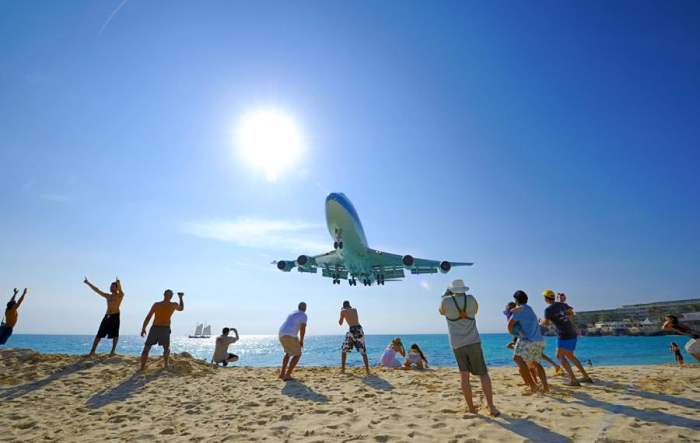
There are two international airports in the vicinity of Villa Edina: Bari and Brindisi. Transfer from both airports is easy.

Villa Edina is about an hour drive (60 km) from the Brindisi (Salento) Airport which is served by several airlines, including low cost airlines such as Ryanair from a lot of European cities. If you do not want to rent a car at the airport, you can reserve a transfer service from the airport to San Pietro in Bevagna. Villa Edina can also help you – upon request – to find a transfer.

Bari (Karol Wojtyla) International Airport is about two hours by car from Villa Edina. You can rent a car at the airport, or you can take a bus or a train as well to get there. Villa Edina can also help you – upon request – to find a transfer.

As far as local transport is concerned, the transport company SITA SUD guarantees an urban public transport service between Manduria, Torre Borraco, San Pietro in Bevagna and Torre Colimena (bus line 4). Rail transport is ensured by the Manduria station, part of the Ferrovie del Sud Est circuit with connections to all locations served by the line.

For airport transfer from Brindisi Airport, more info: here!

For airport transfer from Bari Airport, more info: here!

For train and coach more info: here!

For local traffic, more info: here!

  1. Basic Italian

Although people in the tourism business speak (some) English, not everybody in Salento is fluent – to put it in a diplomatic way. So a basic knowledge of Italian can help you a lot to get things done smoothly and nicely here.

Basic Italian language material: here!

HAVE A NICE STAY! 

                                    Villa Edina

(And don’t worry, this one is NOT the San Pietro in Bevagna beach on this photo!)

airport3


Important practical things for your holidays in San Pietro in Bevagna

You have shops, cafés, bars in San Pietro in Bevagna, but also a pharmacy in the center, a few steps from the beach and also a medical cabinet. Parking is mostly free, except for a very small central area (close to the church, towards the beach where the beach market stands are set up). There are several restaurants with free wifi, there is a (year-round) pizzeria and bar on via Marina, very close to Villa Edina with free wifi. There is no bank in the village, for this you have to go to Manduria where you can find several banks and ATMs, also post offices, hospital, dentists and police stations. The nearest petrol station is in Manduria, a few hundred meters after crossing the city limit (on the highway coming from San Pietro in Bevagna – to your right).

The telephone code of Italy is +39. The area code for the Province of Taranto is: 099. Just for you to know: you are in Comune di Manduria in Provincia Taranto (TA) in Regione Puglia.

Here is a list of useful contacts of police, banks, post offices, doctors, hospitals in Manduria.

Police (Polizia di Stato)

Address: Via Varrone Pirro, 4, 74024 Manduria TA

Tel: +39 099 971 3211

Email: commissariato.manduria.ta@poliziadistato.it

bank1


List of banks in Manduria


Banca Carime SpA
Via Per Maruggio, 9 – 74024
ABI: 03067 – CAB: 78920
Telefono: 099-9711071   ; Fax: 099-9711470
Banca di Credito Cooperativo di Avetrana Scrl
Via Roma, 44 – 74024
ABI: 08354 – CAB: 78920
Banca Monte dei Paschi di Siena SpA (MPS)
Piazza San Francesco, 4 – 74024
ABI: 01030 – CAB: 78920
Telefono: 099-9713646; Fax: 099-4528678
Banca Popolare di Puglia e Basilicata SCpA
Piazza Vittorio Emanuele, 20 – 74024
ABI: 05385 – CAB: 78920
Telefono: 099-9712647; Fax: 099-9712434
Banca Popolare Pugliese SCpA
Via Oria, 43 – 74024
ABI: 05262 – CAB: 78920
Banca Sella SpA
Viale Mancini, 21 – 74024
ABI: 03268 – CAB: 78920
Banco di Napoli SpA
Via Xx Settembre, 106 – 74024
ABI: 01010 – CAB: 78920
Telefono: 099-9738889; Fax: 099-9711125
Unicredit SpA
Piazza Garibaldi, 16 – 74024
ABI: 02008 – CAB: 78921


List of post offices – Manduria

Poste Italiane – Ufficio Postale Manduria 001

Via Roma, 75B
74024 Manduria (Taranto)

Telefono : 099 971 2322

Societ@ Italiana Autori Ed Editori S.I.A.E.

Via Bruno Lupo Donato, 31
74024 Manduria (Taranto)

Telefono : 099 971 3581

Poste Italiane – Ufficio Postale Di Manduria

1 Via Dei Montefuscoli, Manduria, TA 74024, Italia
74024 Manduria (Taranto)

Telefono : 099 979 1349

Nial Mail – S.R.L.

Via I Maggio, 21
74024 Manduria (Taranto)

Telefono : 099 973 5543

Baldari Giovanni Leonardo

Via Erario, 4
74024 Manduria (Taranto)

Telefono : 099 971 1137

Prodotti Finanziari Area Prodotti Finanza

Via Roma, 75B
74024 Manduria (Taranto)

Telefono : 099 979 6492

Prodotti Finanziari Area Prodotti Finanza

Via dei Montefuscoli, 24
74024 Manduria (Taranto)

Telefono : 099 971 3710

Poste Italiane Spa

Via Roma, 75B
74024 Manduria (Taranto)

Telefono : 099 979 6492
Sito Web : www.poste.it/

Poste Italiane Spa

Via dei Montefuscoli, 24
74024 Manduria (Taranto)

Telefono : 099 971 3715


Hospitals in Manduria

 Ospedale Civile M. Giannuzzi

Via Mandonion 1 – 74024 Manduria (TA)

40.4023317.63955

Tel: 099 800221, 099 800408


Azienda Sanitaria Locale di Taranto

Via Mandonion 1 – 74024 Manduria (TA)

40.4023317.63955

Tel: 099 800111, 099 800300


Azienda Unita’ Sanitaria Locale Ta 1

Address: Piazza Giannuzzi Marianna, 1, Manduria

tel: +39 099 800111; +39 099 9795841

Web: www.sanita.puglia.it/


Sol Levante S.R.L.

Address: Via Casalnuovo Vito, 1, Manduria

GPS: 40.402691, 17.639565

Tel.: +39 099 974 2653


Doctors (general practitioners) in Manduria


Di Noi Salvatore

Via della Cittadella 1, 74024  MANDURIA (TA)

099 9794892


Lacaita Francesco

Via Maraschi 5/b, 74024  MANDURIA (TA)

099 9711895


Fanuli dr. Giovanni

Via Piave 1, 74024  MANDURIA (TA)

099 9713988


Resta Imma d.Ssa

Via del Fossato 10, 74024  MANDURIA (TA)

099 9796391


Raho Cosimo dr.

Via Giuseppe Briganti 15, 74024  MANDURIA (TA)

099 9711046


Carruggio Cosimo dr.

Via Barco 8, 74024  MANDURIA (TA)

099 9739066


Stranieri Giuseppe

Via Uggiano Montefusco 18, 74024  MANDURIA (TA)

099 9713901


Dott. Ciro Chianura

Medici Generici

Via San Paolo della Croce 20, 74024  MANDURIA (TA)

335 6572693


Croce Rosa Analisi Snc di Iannarelli Maria Carmela & Dilauro Callerana

Analisi Cliniche – Centri e Laboratori

Via XX Settembre 120, 74024  MANDURIA (TA)

099 9742738


Pediatrics

Valeria Massafra

2, Via Conchi – 74024 Manduria (TA)

Tel:  099 9712814


Veterinary

Pignatelli Dr. Giulio

Via Roma, 89, 74024 Manduria (TA)

Tel: +39 099 973 9967

Ferragosto!

Ferragosto is an Italian and Sammarinese (i.e.: of San Marino) public holiday celebrated on 15 August, coinciding with the major Catholic feast of the Assumption of Mary. It also means the summer vacation period around mid-August, which may be a long weekend (ponte di ferragosto) or most of August. Mid-August is the most lively (and crowded) time for taking a holiday in Italy.

Nowadays, Ferragosto means heading to the family home or a beach resort for a huge lunch, either at home or in a restaurant. Traffic is heavy before and after Ferragosto and trains are usually booked out well in advance for those dates. This is the time when San Pietro in Bevagna, especially its seaside promenade is the busiest and liveliest in the year.

Ferragosto is the most popular holiday in Italy other than Christmas day. Ferragosto coincides with Assumption Day, the principal feast of the Virgin Mary, commemorating the day of the assumption of her body into heaven, but Ferragosto is also the modern derivative of the ancient harvest festivals that were formalised by the emperor Augustus in 18 BC under the name Feriae Augusti (Festivals of Augustus), from which its name Ferragosto is derived. During these celebrations, horse races were organised across the Roman Empire and this tradition remains alive today in Sienna.

For centuries, during the festival, workers greeted their masters, who in return would give them a tip. The custom became so strongly rooted that in the Renaissance it was made compulsory in the Papal States.

The popular tradition of taking a trip during Ferragosto arose under the Fascist regime: in the second half of the 1920s, during the mid-August period, the regime organised hundreds of popular trips setting up of the “People’s Trains of Ferragosto”, which were available at discounted prices. The initiative gave the opportunity to the less well-off to visit Italian cities or the seaside. The offer was limited to 13, 14 and 15 August, and comprised two options: the “One-Day Trip”, within a radius of 50-100 km, and the “Three-Day Trip” within a radius of about 100–200 km.

10 holiday tips for San Pietro in Bevagna – by Villa Edina

  1. Sun, Sand and Sea

The Maldives of Europe – the large sandy beaches of San Pietro in Bevagna are breathtaking. They are not only of smashing quality but also spacious and not yet invaded by mass tourism.

More info: here! and here!

bevigeneral

  1. The Chidro river

A tiny river that makes the San Pietro in Bevagna beach really unique: you can swim (and even dive!) in crystal clear fresh water on your beach! The Chidro is one of the main water flows of the entire Apulian Ionian Coast.

More info: here!

chidro5

  1. The Sarcophagi

In the sea off San Pietro in Bevagna, the wreck of a Roman ship carrying a cargo of marble sarcophagi in the 3rd century AD was found in modern times. It lies on the bottom in 3 to 6 m deep, 70 m off the beach and the Chidro river mouth. You can discover these relics by diving or snorkeling.

More info: here!

sarcofagisanpietro

  1. Natural park

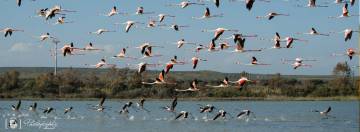
Do you care for a walk in a natural reserve just fifty meters from the sea to watch flamingos? This you can do here in San Pietro at the Natural Parks on the beach (Salina dei Monaci e la Palude del Conte, La Riserva regionale Foce del Chidro).

 More info: here!

salina1

  1. Manduria

San Pietro in Bevagna is the beach village of the charming town of Manduria which is some 10 kilometers further up to the north. Manduria is a so far underrated gem, an ancient city with a lot of interesting sights to offer.

More info: here!

chiesa-di-santa-maria-in-costantinopoli

  1. The Trulli

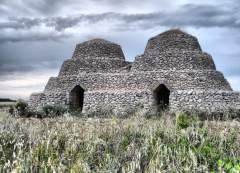
Puglia’s most striking and unique tourist attraction are the trulli. A trullo is a simple dry-stone-walled building with a domed roof topped by a cone. There is a “trulli district” around Alberobello (a UNESCO World Heritage site). But you can find many trulli scattered around in the Salento countryside including the San Pietro in Bevagna area.

More info: here!

trulli2

  1. Lecce

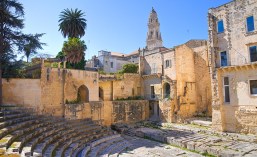
This stunning city is about an hour drive from San Pietro in Bevagna. Lecce is the baroque masterpiece of southern Italy, often described as the ‘Florence of the Baroque’ or the ‘Rome of the South’. You have to see this gem.

More info: here!

lecce5

  1. Otranto

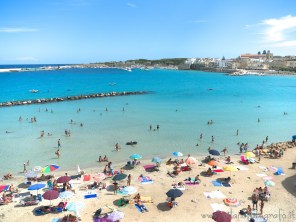
Otranto is some 80 minute drive from San Pietro In Bevagna. This ancient town has a particularly warm Mediterranean atmosphere and a stunning beach right in its city center.

More info: here!

otr9

  1. The Primitivo

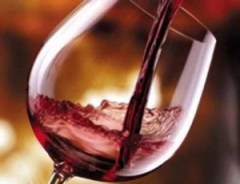
Maybe a shocking name for a wine at first – but this is how it is. What really matters is that this wine is excellent – and full of character. Don’t leave San Pietro without trying it.

More info: here!

primitivo2

  1. Salento food

Salento’s food is a very high quality Mediterranean diet. The base products are olive oil, tomato, pasta, fish, (not too much) meat, fresh vegetables and fruit. Salento dishes are mostly simple but extremely delicious: home-made pasta, honey cakes, fried fish and sea-food with tasty sauces, crunchy bread rolls…

More info: here!

food4


Some knowledge of Italian is handy in Salento

Although people in the tourism business speak (some) English, not everybody in Salento  is fluent – to put in  a diplomatic way. So a basic knowledge of Italian can help you a lot to get things done smoothly and nicely here.

bevigeneral

A few basic words and expressions in Italian


 Parla Inglese?  Do you speak English?
 Grazie  Thank You
 Prego  You are welcome
 Per favore  Please
 Buon giorno  Good Morning – Good Afternoon
 Buona sera  Good Evening
 Buona notte  Good Night
 Come sta? (singular)  How are you?
 Come state? (plural)  How are you?
 Mi scusi / Scusi  Excuse me
 Ciao  Hello / Goodbye
 Quanto costa?  How much does it cost?
 Arrivederci  Goodbye
 Dov’è ….?  Where is …?
 Bagno  Lavatory/Toilet
 Mangiare  To eat (verb)
 Dove si trova… l’ambasciata?  Where is… the Embassy?
 Ristorante  restaurant
 Francobollo  stamp
 Cartolina  postcard
 Posso fare fotografie?  May I take photos?
 Dove posso trovare un…  Where can I find a…
 Ho una prenotazione / Abbiamo una prenotazione  I have a booking/ we have a booking
 Vorrei qualcosa da mangiare  I would like something to eat
 Vorrei qualcosa da bere  I would like something to drink
 Come posso andare a…  How can I go to….
 Sono allergico a…  I am allergic to…
 Accettate carte di credito?  Do you accept credit cards?
 Prescrizione / ricetta  Prescription
 Posso pagare al check-out?  May I pay at check-out?
  Il conto, per favore.  The check please.
 C’è la connessione ad internet?  Is there internet connection?
 Quanto costa? / Quanto costa questo?  How much does it cost? / How much does this cost?
 Polizia / Carabinieri  Police
 Taxi  Taxi
 Fermata dell’autobus  Bus stop
 Aeroporto  Airport
 Stazione  Train station
 Farmacia  Pharmacy
 Medico  Doctor
 Albergo / Hotel  Hotel
 Dolore  Pain
 Vesciche  Blisters
 Supermercato  Food store
 Negozio  Shop
 Ospedale  Hospital
 Pronto soccorso  Emergency room
 Museo  Museum
 Biglietteria  Ticket desk
 Guida turistica  Guidebook
 Visita guidata  Guided tour
 Orario di apertura  Opening time
 Spingere  Push (a door)
 Tirare  Pull (a door)
 Dove posso lasciare… la mia borsa?  Where can I leave… my bag?
 Vai via!  Go away!
 Nord  North
 Sud  South
 Est  East
 Ovest  West

https://www.youtube.com/watch?v=4idIoNcs61o


Useful situational expressions

Italian Greetings

Offer polite greetings to friends and associates or as a way to break the ice when meeting new people. These are some common greetings in Italian:

  • Buongiorno!(bwohn-johr-noh) (Hello! and Good morning!)
  • Arrivederci!(ahr-ree-veh-dehr-chee) (Goodbye!) (Formal)
  • Ciao!(chou) (Hello! and Good-bye!) (Informal)
  • Salve!(sahl-veh) (Hello! and Good-bye!) (Neutral)
  • Buonasera!(bwoh-nah-seh-rah) (Good afternoon! Good evening!) (Formal)
  • Buonanotte!(bwoh-nah-noht-teh) (Good night!) (Informal)
  • Come si chiama?(koh-meh see kyah-mah) (What is your name?) (Formal)
  • Come ti chiami?(koh-meh tee kyah-mee) (What is your name?) (Informal)
  • Mi chiamo…(mee kyah-moh) (My name is. . .)
  • Come sta?(koh-meh stah) (How are you?) (Formal)
  • Come stai?(koh-meh stahy) (How are you?) (Informal)
  • Bene, grazie.(beh-neh grah-tsee-eh) (Fine, thank you.)

Italian Courtesy Phrases

  • Per favore(pehr fah-voh-reh) (Please.)
  • Per piacere (pehr pyah-cheh-reh) (Please.)
  • Grazie(grah-tsee-eh) (Thank you.)
  • Prego!(preh-goh) (You’re welcome!; By all means, after you.)
  • Non c’è di che.(nohn cheh dee keh) (You’re welcome.)
  • Mi dispiace.(mee dees-pyah-cheh) (I’m sorry.)
  • Mi scusi.(mee skooh-zee) (Excuse me, formal.)
  • Scusi, un informazione, per favore.(skooh-zee oohn-een-fohr-mats-yoh-neh pehr fah-voh-reh) (Excuse me, I need some information, please.)
  • (skooh-zah) (Excuse me, I’m sorry, informal)
  • Permesso?(pehr-mehs-soh) (Excuse me — when walking through a crowded train compartment; also, “May I come in?” when crossing the threshold of someone’s house.)
  • Sì.(see) (Yes.)
  • (noh) (No.)

Basic Question Words in Italian

To communicate in Italian and to travel with ease, there are practical questions in Italian that you’ll use daily and have to know:

  • Parla inglese?(pahr-lah een-gleh-zeh) (Do you speak English?)
  • Chi?(kee) (Who?)
  • Cosa?(koh-sah) (What?)
  • Quando?(kwahn-doh) (When?)
  • Dove?(doh-veh) (Where?)
  • Perché?(pehr-keh) (Why?)
  • Come?(koh-meh) (How?)
  • Quanto?(kwanh-toh) (How much?)

Try these helpful phrases:

  • Dov’è la stazione?(doh-veh lah stah-tsyoh-neh) (Where is the station?)
  • Scusi, dov’è il bagno?(skooh-zee doh-veh eel bahn-yoh) (Where is the bathroom?)
  • Quanto dista il Colosseo?(kwahn-toh dees-tah eel koh-lohs-seh-oh) (How far is the Coloseum?)
  • Dove si mangia il miglior gelato?(doh-veh see mahn-jah eel meel-yohr geh-lah-toh) (Where can you get the best ice cream?)

Come si arriva in Piazza della Repubblica? (koh-meh see ahr-ree-vah een pyahts-sah dehl-lah reh-pooh-blee-kah) (How do you get to Piazza della Repubblica?)

Days of the Week in Italian

In Italian, the days of the week aren’t capitalized. Eyeball this table of the days of the week in Italian (along with pronunciations and abbreviations) to ensure you get your days straight while in Italy.

Italian/Abbreviation Pronunciation Translation
domenica/do. doh-meh-nee-kah Sunday
lunedì/lun. looh-neh-dee Monday
martedì/mar. mahr-teh-dee Tuesday
mercoledì/mer. mehr-koh-leh-dee Wednesday
giovedì/gio. joh-veh-dee Thursday
venerdì/ven. veh-nehr-dee Friday
sabato/sab. sah-bah-toh Saturday

You might also need to know how to say the following:

  • Oggi (ohj-jee)(today)
  • Domani (doh-mah-nee)(tomorrow)
  • Dopodomani (doh-poh-doh-mah-nee) (day after tomorrow)
  • Ieri (yeh-ree) (yesterday)

Getting Help for Emergencies in Italian

  • Aiuto!(ah-yooh-toh) (Help!)
  • Emergenza!(eh-mehr-jehn-tsah) (Emergency!)
  • Chiamate la polizia!(chee-ah-mah-teh lah poh-lee-tsee-ah) (Call the police!)
  • Chiamate un’ambulanza!(kee-ah-mah-teh ooh-nahm-booh-lahn-tsah) (Call an ambulance!)
  • Ho bisogno di un medico.(oh bee-zoh-nyoh dee oohn meh-dee-koh) (I need a doctor.)
  • Dov’è l’ospedale?(doh-veh lohs-peh-dah-leh) (Where is the hospital?)
  • Mi sento molto male.(mee sehn-toh mohl-toh mah-leh) (I feel very sick.)

Ordering Food and Drink in Italian

  • Un cappucccino, per favore.(oohn kahp-pooh-chee-noh pehr fah-voh-reh) (A cappuccino, please.)
  • Un bicchiere di acqua minerale per favore.(oohn bee-kyeh-reh dee ahk-wah meen-eh-rah-leh perh fah-voh-reh). (A glass of mineral water, please.)
  • Mezzo litro d’acqua. (mehdz-zoh lee-troh dahk-wah) (Half a liter of water.) (Generally, you would take this to go, not standing at the bar)
  • Mezzo chilo di pesche, per piacere.(mehdz-zoh kee-loh dee pehs-keh perh pyah-cheh-reh) (Half a kilo of peaches, please.)
  • Quanto viene?(kwahn-toh vyeh-neh) (How much does it come to?)
  • Un gelato di 2 euro, per favore.(oohn geh-lah-toh dee dooh-eh eh-ooh-roh pehr fah-voh-reh) (A 2-Euro size ice cream, please.)
  • Quali gusti?(kwah-lee goohs-tee) (What flavors?)
  • Ci fa il conto, per favore?/Ci porta il conto?(chee fah eel kohn-toh pehr fah-voh-reh/chee pohr-tah eel kohn-toh) (Will you bring us the bill please?)

 A bit longer list of words and expressions is found here: http://globtourism.com/files/catalog/1222238732_English-Italian.pdf

Salento food

Salento’s food is typical of the Mediterranean diet and has ancient origins. The base products of gastronomy of this area are similar to the ones of the other countries around Mediterranean: olive oil, tomatoes, pasta, legumes, fish, a little meat, fresh vegetables and fruit. Salento dishes are mostly simple but extremely delicious: home-made pasta, cakes with honey, fried fish with tasty sauces, crunchy bread rolls, etc.

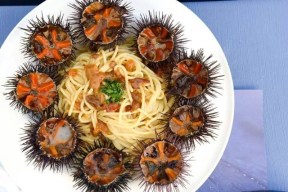
The local food is very nutritious and healthy due to the importance given to raw materials, both from land and sea. Some excellent typical dishes are: rice, potatoes and mussels (also called tajeddha), sea bream of San Nicola, roasted lamb, turcinieddhi or gnummareddhi (rolls of giblets), pieces of horse, pittule (balls of fried dough prepared at Christmas), rape ‘nfucate (fried turnip greens), pitta di patate (potato cake), eggplant parmigiana, potato croquettes, lu purpu alla pignata (stewed octopus), cicòre a minéscia cu llà pancetta de maiale (soup with wild chicory and pancetta), fried tomatoes, squid alla gallipolina, spaghetti with anchovy and breadcrumbs, fried zucchini flowers, sautéed mussels with pepper, fried artichokes, mussels au gratin, sautéed wild onions, bombette of Cisternino (breaded slices of veal rolled up with caciocavallo cheese), tripe with potatoes, pasta with sea urchins, blood sausage, municeddhe (snails), and many other classics of the local cuisine.

Salento’s desserts are real masterpieces and very often linked to religious worship, such as the lamb in almond paste and the cuddhura (a crown of sweet bread) for Easter; carteddhate (rose shaped fried cakes) and purceddhruzzi (small cubes of fried sweet dough covered with honey) at Christmas; donuts in honour of San Giuseppe; and also, taralli (crackers) with sugar, dried fig with almonds, copeta (almond brittle), mostaccioli (a sponge cake base with cocoa powder, candied citrus, almond paste, and chopped almonds inside), spumoni (moulded Italian ice cream with layers of different flavours), cotognata (sweet made with quince):

The entire territory is covered with olive groves, from which the delicious Pugliese olive oil is pressed. In many parts the rows of olive trees are alternated with large vineyards. Wine and olive-oil are two fundamental components of the Salentine cuisine.

Every season here tells a different story and visitors to Puglia wanting a gastronomic experience to remember will not be disappointed. Whether you visit in January for the Puccia dell’Ampa: a celebration of wood-baked bread, February for the Octopus festival, or September to join the Sammichele celebrations with a feast of zampina salsiccie sausage, your appetite is sure to be satisfied.

Whatever your budget or diet, Puglia’s gastronomic emergence offers something for all. From simple trattorias to Michelin-starred restaurants, this is Mediterranean food at its best.

See more at: http://www.salentodolcevita.com/en/territory/travel-tips/gastronomy-food-and-delights-in-puglia.htm

In San Pietro in Bevagna you can find several types of restaurants, bistros, pizzerias, sea-food restaurants and simple eateries. A simple but delicate food easily available all around Puglia, including on the seaside street eateries of San Pietro in Bevagna is the panzerotto. A panzerotto, also known as panzarotto, is a savory tunover which resembles a small calzone, both in shape and in the dough used for its preparation. The term usually applies to a fried turnover rather than an oven-baked pastry (i.e. a calzone). Panzerotto originates in Central and Southern Italian (typically Puglia) but is now popular in the US and Canada as well. The noun panzerotto comes from a diminutive of panza, a regional variation of Italian pancia (“belly, tummy”), referring to the distinctive swelling of the pastry which reminds of belly bloating in a figurative sense.

The most common fillings for this turnover are tomato and mozarella, but spinach, mushrooms, baby corn and ham are often used. Another filling is onion stir fried in olive oil and seasoned with salted anchovies and capers. A different recipe for panzerotti is panzerotti di patate (“potato panzerottis”), a specialty of Salento which consists of mashed potato croquettes.

How to make the perfect panzerotti:

http://www.agrodolce.it/2014/06/10/classifica-dei-10-migliori-panzerotti-fritti-del-salento/

https://www.youtube.com/watch?v=y9oFU5H6QKc

A visit to neighboring Oria

Oria is only 25 kilometers from Villa Edina – a short drive takes you there.

Oria in classical times was known as Hyria or Hyrium, a city in ancient Messapia and one of the principal Messapian cities. It was just north of the ancient town Manduria.

oriaroutecrop

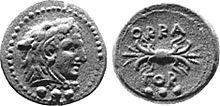
According to Herodotus, it was founded by the Messapians (who according to Herodotus were originally Cretans). Between 217 and 84 BC the city was minting its own coins. Hyria was then conquered by the Romans. It was destroyed in AD 924 and 977. In 1266, Oria was besieged by Manfred of Sicily. Oria had one of the oldest Jewish communities in Europe. Jewish scholarship in Oria included the study of philosophy, the Talmud, languages such as Greek and Latin, moreover medicine and natural sciences. It was home some of the first Hebrew writers native to Europe. Ten scholars in the community were killed when Arabs conquered Oria in 925. This was the beginning of the end of Jewish presence in Oria; the last relic was an epitaph produced in 1035. It is likely, however, that Jews were living in Oria until the 15th century.

oriacoins

A coin from Oria, Roman age, portraying Hercules.

The main sights of Oria are:

  • Castle, mostly the result of modifications from the early 13th century under Frederick II Hohenstaufen and, later, under the Angevines, who added two cylindrical towers.
  • Gate of the Jews (Italian: Porta degli Ebrei).
  • Oria Cathedral: Basilica, built from 1750 over a pre-existing building damaged by an earthquake. The interior houses numerous paintings from the 17th to the 20th century. The exterior is commanded by the large polychrome dome.
  • San Domenico: church built from 1572. The interior has Baroque paintings, while also notable is the cloister of the annexed convent.
  • San Francesco d’Assisi
  • San Francesco da Paola: late 16th century church
  • San Giovanni Battista: church originally built in the 14th century but later included in a large Baroque edifice in the 17th century.
  • Grotto church of Madonna della Scala.
  • Bishop’s Palace (16th century)

Oria is also famous for its summer festivals.

A trip to Otranto – A tip from Villa Edina

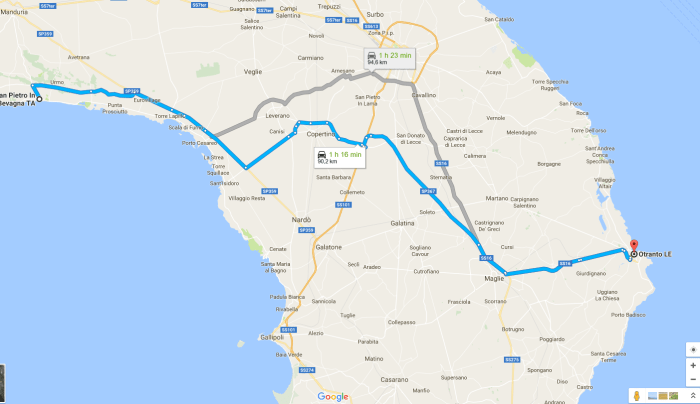
Otranto is some 80 minute drive from Villa Edina – and it’s worth a try. Otranto (Latin: Hydruntum) is a town in the province of Lecce, in a fertile region once famous for its breed of horses. Otranto has a warm Mediterranean climate and a nice beach in the center of the town.

beviotrantoroutecropfinal

It is located on the east coast of the Salento peninsula. The Strait of Otranto, to which the city gives its name, connects the Adriatic Sea with the Ioninan sea and separates Italy from Albania. Otranto’s harbour is small and has little trade.

The lighthouse Faro della Palascìa, at approximately 5 kilometres (3 miles) southeast of Otranto, marks the most easterly point of the Italian mainland.

About 50 kilometres south lies the promontory of Sant Maria di Leuca (so called since ancient times from its white cliffs, leukos being Greek for white), the southeastern extremity of Italy, the ancient Promontorium lapygium or Sallentinum. The district between this promontory and Otranto is thickly populated and very fertile.

Otranto occupies the site of the ancient Hydrus (in Greek: Ὑδροῦς) or Hydruntum (in Latin). Otranto was a town of Greek origin, which, in the wars of Pyrrhus and of Hannibal sided against Rome. In Roman times it was a city. As it is the nearest port to the eastern coast of the Adriatic Sea, it was perhaps more important than Brundisium (present Brindisi), under the Roman emperors as a point of embarkation for the East, as the distance to Apollonia was less than from Brundisium.

It remained in the hands of the Byzantine emperors until it was among the last cities of Apulia to surrender to the Norman Robert Guiscard in 1068, and then became part of the Principality of Taranto. In the Middle Ages the Jews had a school there.

In 1480, Mehmet the Conqueror sent an Ottoman fleet to invade Rome. This force reached the shores of Apulia on 28 July 1480 and the city was captured in two weeks on 11 August 1480. Some 800 citizens, known as the “Martyrs of Otranto,” were beheaded after refusing to convert to Islam. They were canonized by Pope Francis on 12 May 2013.

The main sights of Otranto:

  • The Castello Aragonese (Castle), reinforced by Emperor Frederick II and rebuilt by Alphonso II of Naples in 1485–98. It has an irregular plan with five sides, with a moat running along the entire perimeter. In origin it had a single entrance, reachable through a draw-bridge. Towers include three cylindrical ones and a bastion called Punta di Diamante (“Diamond’s Head”). The entrance sports the coat of arms of Emperor Charles V.
  • The Cathedral, consecrated in 1088, a work of Count Roger I adorned later (about 1163), by Bishop Jonathas, with a mosaic floor; it has a rose window and side portal of 1481. The interior, a basilica with nave and two aisles, contains columns said to come from a temple of Minerva and a fine mosaic pavement of 1166, with interesting representations of the months, Old Testament subjects and others. Bones and relics of the Martyrs of Otranto, who perished in the 15th-century siege surround the high altar. The church has a crypt supported by 42 marble columns. The same Count Roger also founded a Basilian monastery here, which, under Abbot Nicetas, became a place of study; its library was nearly all bought by Bessarion.
  • The church of San Pietro, with Byzantine frescoes.
  • The catacombs of Torre Pinta.
  • Idro, a small river which the toponym Otranto stems from

 Source: Wikipedia.

Official website of Otranto: http://www.comune.otranto.le.it/